Paradox's Afterworld feels like the first grand strategy game I can properly
What the report saysI've got a bit of a funny relationship with Paradox's grand strategy games. I love the idea of them, of waging and flirting my way across history on the most granular of levels. But despite my…
What the report says
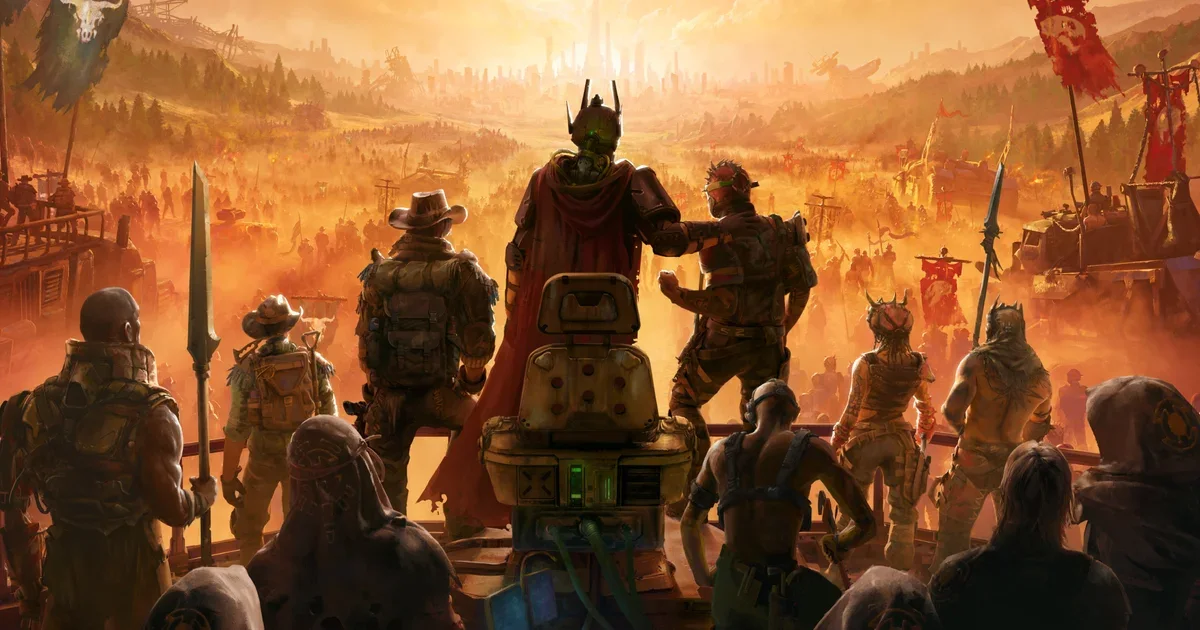
I've got a bit of a funny relationship with Paradox's grand strategy games. I love the idea of them, of waging and flirting my way across history on the most granular of levels. But despite my enthusiasm, and despite my best efforts, I've never properly cracked one: it doesn't take long before I'm feeling thoroughly overwhelmed and my attention quickly begins to wane. I bring this up, because my relatively brief hands-on time with Paradox's new post-apocalyptic grand strategy game Afterworld suggests - thanks to some smart design decisions - it might finally be the one for me.Like Paradox's other in-house grand strategy games, Afterworld brings its own unique twist.
So while Crusader Kings is very much the studio's take on role-playing, Afterworld draws inspiration from survival and settlement building games, letting players loose in a post-apocalyptic version of North America blighted by hazardous terrain and dangerous old-world ruins. Here, they're the guiding hand for a ragtag group of survivors, who they'll grow from humble beginnings into a continent-spanning empire - perhaps by utilising ancient technology and inspiring fear, or perhaps by building a civilisation that takes care of its people.And it all starts with a choice: who will your survivors be? In the build I played, Afterworld features three starting origins, each with its own narrative flavour (Paradox describes Afterworld as "story rich", and most objectives, choice points, and discoveries come with art, story scraps, and flavour text, meaning that while you're not role-playing in the same ways as Crusader Kings, there's still the sense that you're part of your own epic adventure).
Origins, more specifically, are intended to help you lean into certain playstyles faster. You've got your vault dwellers - the Shelterborn - emerging into the world after generations spent underground, who are balanced for beginners. There's a wandering group of fanatics who worship a powerful Ancient and lean into more religious, ideological styles of play. And finally for now, there's a band of former wardens and prisoners, intended for more aggressively militaristic, war-focused players.I played it safe, opting for the Shelterborn, but before I could hit the map, I had a couple more choices to make, further shaping the foundations of my tribe for the adventure to come.

Key details
One meant my tribe would be naturally more frugal with food distribution, while another turned them into secret cannibals - more than happy to rely on, uh, alternative food sources in times of need. And with the groundwork complete, it was time to embark on my first objective: scout the surrounding land in search of a new place to call home before my shelter's reactor went 'boom'. 1 of 4 Caption Attribution It's a clear starting point, split into easily understandable steps, simply requiring you to direct your single unit - the Ranger - across five provinces (as the bordered areas on the procedurally generated map are known).
And as he does, the fog of war lifts, revealing resource spots and 'mysteries' to investigate. The former are exactly what they sound like - you might stumble across squirrels to hunt when your group is finally settled, or water spots to claim as your own - while the latter are little surprises.At one point, for instance, my unit comes across a small farm, and - after a bit of flavour text - I'm able to pick riding as my reward. This (I think) meant my unit could now travel further on its supplies without needing to return to base to refresh them - and, pleasingly, it also meant I could see my unit riding his own horse when using Afterworld's unexpectedly striking zoomed-in map.
But map discoveries can also spark new 'ideas'.This is another clever bit. Afterworld already has the familiar early hours exploratory rhythms of a traditional 4X, so mechanically it's easy enough to both explain and understand. And Ideas are Paradox's way of keeping the information influx further under control. Unlike in, say, Crusader Kings, which is happy to throw endless terminology and gameplay concepts at you from the start, in Afterworld, key mechanics - and any explanations related to them - are kept hidden until you discover them. As game director Dan Lind explains to me, "This means we can kind of dripfeed you mechanics [at the same time] you're exploring the lore of the world."Finding a river on the map might spark the idea of fishing, opening up related options to research.
More from the announcement
But combinations of ideas unlock new avenues too. During my travels, for instance, I come across a forest, a buggy, and roads - apparently opening the possibility of fast mobile warfare. Diplomacy gameplay, meanwhile, requires that you've generated enough Survival Pride - essentially Afterworld's version of levelling experience - and sufficient standing.